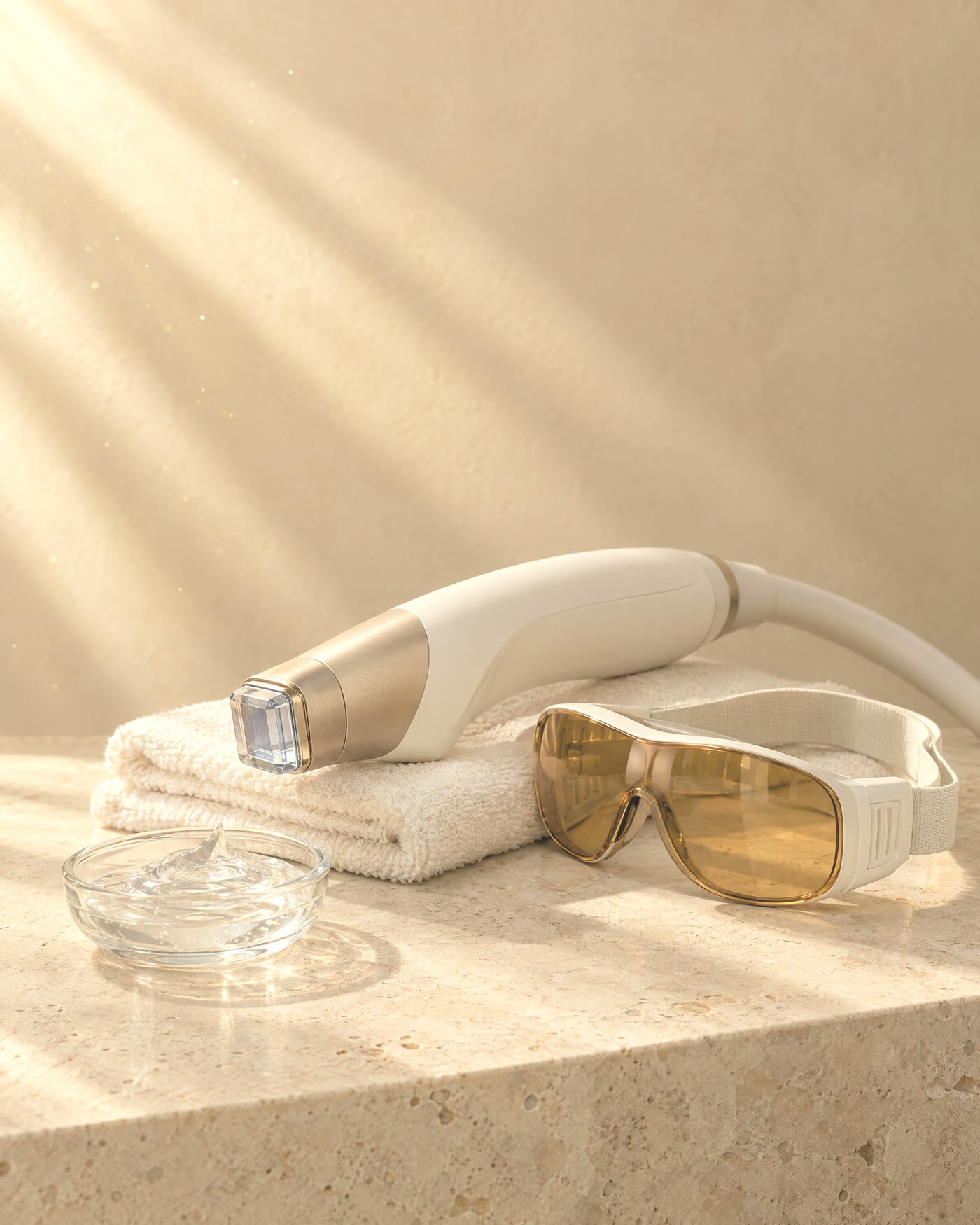
What is laser hair reduction?
Short pulses of laser light are absorbed by the dark colour in each hair and turn to heat at the root.
Only hairs in their growing phase are likely to respond at each session, which is why it is planned as a course.
Who it tends to suit, and who should wait
It is for adults aged 18 and over. It works best on darker hair against lighter skin. Very fair, grey, white or red hair responds poorly, if at all.
Which skin tones it suits depends on the device, and deeper skin tones carry a higher risk of burns and changes in skin colour. I’ll check your skin tone against what my device is designed for, and use more cautious settings for deeper skin. Hair growth linked to hormones can respond less predictably and may need more sessions.
Suitability is always checked in person, so you don’t need to share health details by message. Please wait if:
- you are pregnant or breastfeeding
- you have a tan or fake tan, a cold sore, or sunburnt, broken or irritated skin in the area
- you take some medicines that make skin more sensitive to light, or have some health conditions
Areas I’ll offer
I’ll offer the upper lip, chin, underarms, bikini line, arms and legs. I won’t treat close to the eyes, and I’ll work around tattoos and moles.
Your patch test, and getting ready
Your consultation will happen in person, at the start of your appointment, and you will need a patch test at least 48 hours before your first session. Once laser is available, message me before you book and I’ll arrange it.
Before each session:
- Shave the area the day before.
- Don’t wax, pluck, thread or use an epilator for about four weeks before, because the light targets the root.
- Keep strong sun and sunbeds off the area for about four weeks before, and let any fake tan fade fully, because a tan makes blistering and changes in skin colour more likely.
On the day, and what it feels like
We’ll both wear protective eyewear, because the light can harm the eyes. Each pulse feels like a quick flick from an elastic band, with a little warmth, and can feel sharper on the upper lip and bikini line. A cooling tip on the handpiece takes the edge off for many people. I’ll go at your pace and stop whenever you ask.
A small area takes about 15 minutes, and larger areas take longer.
How many sessions, and what about top-ups?
Hair reduction is usually planned as a course of six to eight sessions, four to six weeks apart on the face and six to eight weeks on the body. We’ll agree your plan and the full cost before you commit.
Many people notice regrowth looks finer and sparser as the course goes on, though results vary, and some hairs may not respond. If it is not working for you, I’ll say so. Expect the odd top-up after the course, often once or twice a year.
Aftercare and possible side effects
The area often looks pink, with small bumps around the hairs, and feels warm, like mild sunburn, for a few hours, sometimes a day or two. Treated hairs may shed over the next few weeks, which is normal.
Less often, people get swelling, itching, spots or a cold sore flare. Rarer risks include blistering, burns, scarring and changes in skin colour. Colour changes can take months to fade, and occasionally they do not. Rarely, more hair grows in or near the area instead of less. If anything doesn’t look right, message me and I’ll advise you, or suggest you see your doctor.
You’ll go home with written aftercare. In short:
- Throughout your course, wear SPF on any treated area that sees daylight, and avoid strong sun and sunbeds.
- Skip the gym, saunas, swimming and hot baths for 48 hours.
- Between sessions, shave only, with no waxing, plucking, threading or epilating.
- Messages are not monitored overnight. If you feel unwell after any treatment, call 111, or 999 in an emergency.
When can I book?
Laser hair removal is not available just yet, so it cannot be booked. Message me on Instagram or WhatsApp if you would like to hear when it launches, and I’ll tell you the price for each area then.